‘A lot of heart’: KU alumnus’ gift propels Crew Club forward
July 24, 2026
By Rylie Oswald
For Garry Tanner, the KU Crew Club was a haven from his rigorous chemical engineering classes and work. The rowing club was a transformative experience, a place to make lasting friendships while also getting into what Tanner describes as the “best shape of my life.” It was also a way to give back to the university that jump-started his career.
“I remember getting my student loan that was so critical to getting through college, as I essentially put myself through college and worked two jobs during the summer to pay for it,” Tanner said. “When I got the student loan, I told the loan officer that I wouldn’t forget this, and when I could, I would strive to give back to the university that helped me. That day is now.”
Tanner, who graduated from the University of Kansas in 1984, and his wife, Carolyn, made a commitment of $1 million to the club. The Tanners initially made a gift of $500,000 that will ensure it has a dedicated coach, a designated endowed fund and resources for success. When others give $500,000 to Crew Club, the Tanners will match these gifts with another $500,000, with a long-term goal to raise $2 million for the club.
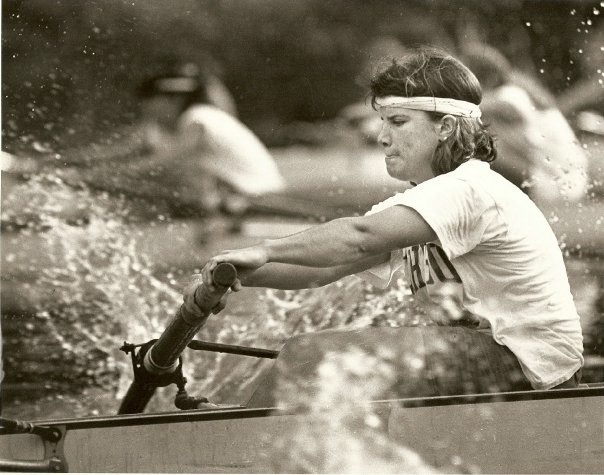
Crew Club may be a student-run club, but its members put in as much work as if they were a Division 1 rowing team. Students practice daily to learn rowing techniques that help a boat maintain balance and attain the most speed. Practices also mean tough workouts that prepare athletes for competition in the high-intensity endurance sport. Crew Club can even produce astronauts; Loral O’Hara, a KU and Crew Club alumna, is the fourth Jayhawk to travel to space.
“I remember running down to the river a couple of miles from my West Hills apartment, rowing and working for a couple of hours and then running home,” Tanner said. “Back then, 500 sit-ups was just another day.”
All the moving parts of Crew Club make it one of the most expensive clubs on campus. The club needs shells, or boats, for teams ranging in size from one person to eight. It needs oars for the rowers, one or two per person, depending on the boat. The cost of transporting both students and shells to competitions across the country also can add up.
“When I rowed, we had a chain-link fence, a couple of old shells and a lot of heart,” Tanner said. “The lightweight boat won the Midwest regionals, which was the highest level we competed in, and we sent our heavyweight boat to the Head of the Charles competition [in Boston]. This ragtag group was competing with almost no resources.”
When Tanner was in the club, an eight-person shell could cost around $10,000. Now, an eight-person shell is about $60,000, said Jason Krone, director of KU Recreation Services.
“Even the oars themselves are expensive,” Krone said. “Travel is expensive. You have rental cars, you have gas, hotels, food, buses. It’s in our top level of expensive sports.”
Tanner’s gift will help cover these expenses, as well as boost student recruitment through lowering the dues structure. This will make the club more accessible, and Krone said it could expand to 70 students. Crew Club had shrunk, from around 100 members in the late 1980s to less than 10 in the last few years. Nevertheless, the club has always had a strong sense of belonging among its rowers.
“The regattas and camaraderie were tremendous,” Tanner said. “The first time eight of us were rowing in unison, the speed we felt was like flying on the water. So fun and hard in a good way.”
Kelly Becker, a 1990 crew alum, can agree that the Crew Club is tightknit. The friendships she made in the club are lifelong. Kelly even met her husband, Ulf, in the club, and they keep in touch with other crew alumni. She and Ulf vacation and attend KU basketball games with their old teammates. For Kelly, Crew Club was about competition and connections.
“I was really just looking for a place to belong,” she said. “When you go from high school to college, it’s a big place, and you’ve got to find your group of people, or your club, where you have a sense of belonging.”
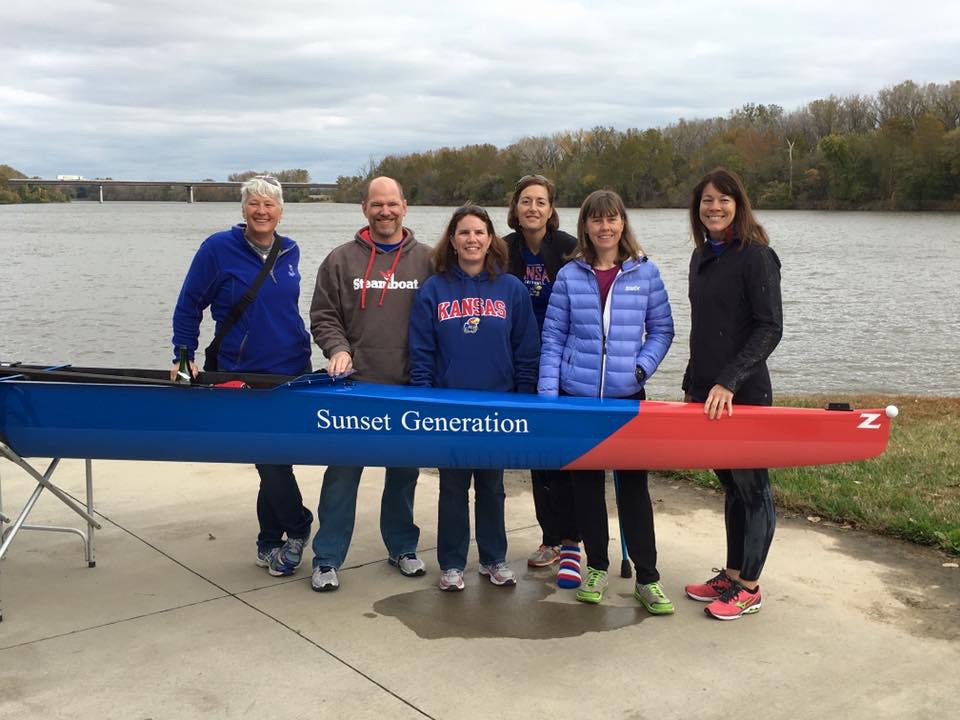
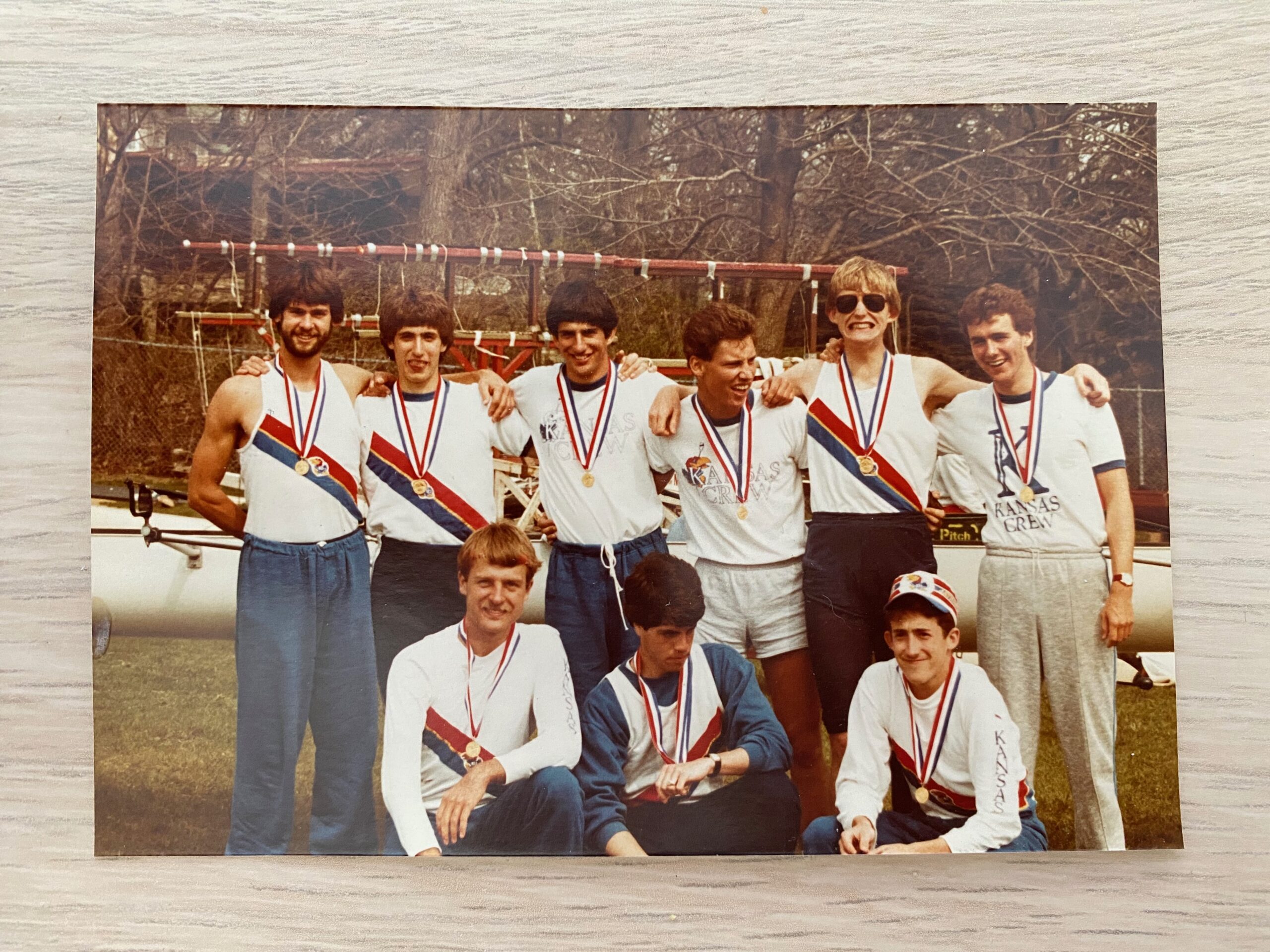
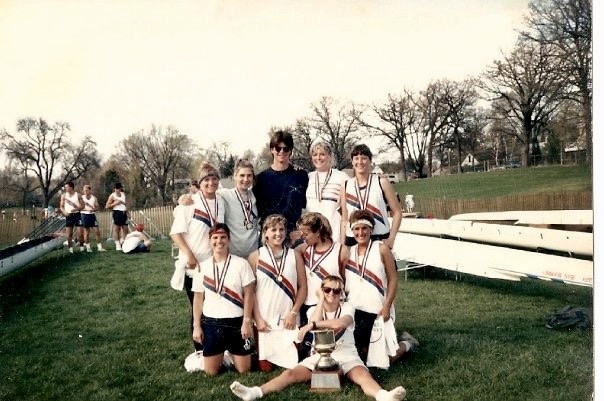
Both Kelly and Ulf remember the feeling of rowing in the Head of the Charles Regatta. Spectators lined the banks of the river that separates Boston and Cambridge, Massachusetts, as shells skimmed across the water’s surface. Rowing in Kansas is not as “big of a deal as when you go out to the East Coast,” Kelly said, so seeing people crowded to watch the race made the energy high.
“That trip hooked me,” Ulf said. “I was not hooked until my second year rowing. I went into that year thinking I had to row at least two years to make the experience worthwhile. Fortunately, I was selected for the varsity men’s lightweight boat. A road trip halfway across the country to compete in Boston — what could be better?”
In recent years, Crew Club has had part-time coaches who worked to ensure the team stayed competitive. With Tanner’s gift, the club will have a full-time coach, allowing the team to meet its full potential. Hiring for the coach position is currently underway.
“Student leadership changes on an annual basis, and being able to have somebody here from year to year really helps stabilize the club and provides continuity,” Krone said. “They’re going to spend their summer recruiting incoming students. They’re also going to have a much higher level of expertise within rowing by providing practical, knowledgeable and expert training and organization for the crew.”
Tanner’s gift will also add an entrepreneurial component to crew. The club already has a student president and vice president, but now they will also have an opportunity to gain skills by running the club through a business lens with the help of the Catalyst program at the School of Business.
“Catalyst is a peer-led ideation experience,” said Brian Anderson, executive director of entrepreneurship initiatives and Frank T. Stockton Professor at the School of Business. “Students help each other ideate on their business concept, how to do customer discovery, how to see how a business model fits together in a narrative around value proposition and how to market these points. It’s really a way for students to dig into an idea and get some reps around how this entrepreneurship process works for the Crew Club.”
With Catalyst, Crew Club students will not only learn how to work as a team but also gain entrepreneurial skills they will carry with them after graduation and into their careers. To Anderson, student-run clubs are like “small ventures.”
“They have budgets, they have recruiting objectives, they have value propositions to members and donors,” Anderson said. “This is a really exciting way to build some additional planning structure and sustainability for the club through taking advantage of the Catalyst resource.”
Tanner’s $1 million commitment is a gift to a club he loves, and he hopes that others who see the value in crew are inspired to give to the club as well. And his wishes are already being fulfilled; in the wake of his gift, two donors gave $100,000 to the club as well.
“To me, crew is one of the best team sports you can do, and life is a team sport. You can’t do it alone,” Tanner said. “Crew is hard, also like life, but doing hard things, doing them together, and having fun doing it with people you like is what I think we are all looking for. KU Crew Club did that for me, and I would want that experience for everyone.”
If you would like to follow Tanner’s and other donors’ leads in supporting students interested in rowing, you can give directly to the Crew Club giving page. You can also reach out to Kristin Shore, senior development director at KU Endowment, at 785-832-7341 or [email protected].
KU Endowment is the independent, nonprofit organization serving as the official fundraising and fund-management foundation for KU. Founded in 1891, KU Endowment is the first foundation of its kind at a U.S. public university.
Posted on
July 24, 2026

Share this article
Connect with Us