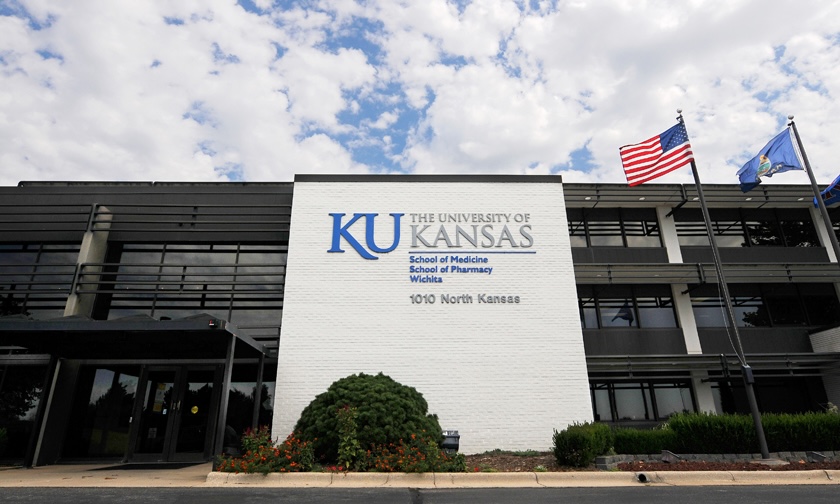
Scouffas’ success with the therapy highlights KU Cancer Center’s leadership in this type of treatment. The center’s new Kansas City, Kansas, facility, under construction and slated to open in early 2028, includes a Good Manufacturing Practice lab that will bring cellular therapeutics in-house, saving time and, ultimately, patients’ lives. Currently, cells must be sent to a lab in another state for that process.
While CAR T-cell therapy has shown success, it doesn’t work for everyone. A team of investigators led by Dr. Joseph McGuirk, director of the Hematologic Malignancies and Cellular Therapeutics program at KU Cancer Center, is taking CAR T-cell therapy a step further, with an early-phase clinical trial dubbed “Triple Threat.”
In the trial, scientists aim to circumvent resistance to CAR T-cell therapy by simultaneously targeting three types of antigens on the surface of cancer cells, rather than just one. If the cancer stops expressing one of the three targeted molecules, then the cancer can still be killed via either or both of the others. Moreover, the CAR T- cells produced for this trial are designed to multiply quicker and persist for a longer period of time. “They need to be around long enough to kill every last cancer cell,” said McGuirk.
Today, nearly a year after the treatment that put her cancer into complete remission, Scouffas is rebuilding her strength, planning trips with Graham and embracing what she calls a renewed appreciation for everyday life.
“Sometimes I will sit on my deck in the morning and marvel that I am still alive. I am so incredibly thankful,” she said.
Their experience also transformed their perspective on philanthropy. The couple established the Scouffas-Graham Blood Cancer Research Fund to support continued innovation at KU Cancer Center.
For Scouffas and Graham, the gift is both deeply personal and profoundly hopeful — an investment in future survivors and the lifesaving possibilities of cancer research.
“What price do you put on the science that saves the life of a loved one?” Graham said. “These researchers need support so they can keep going.”